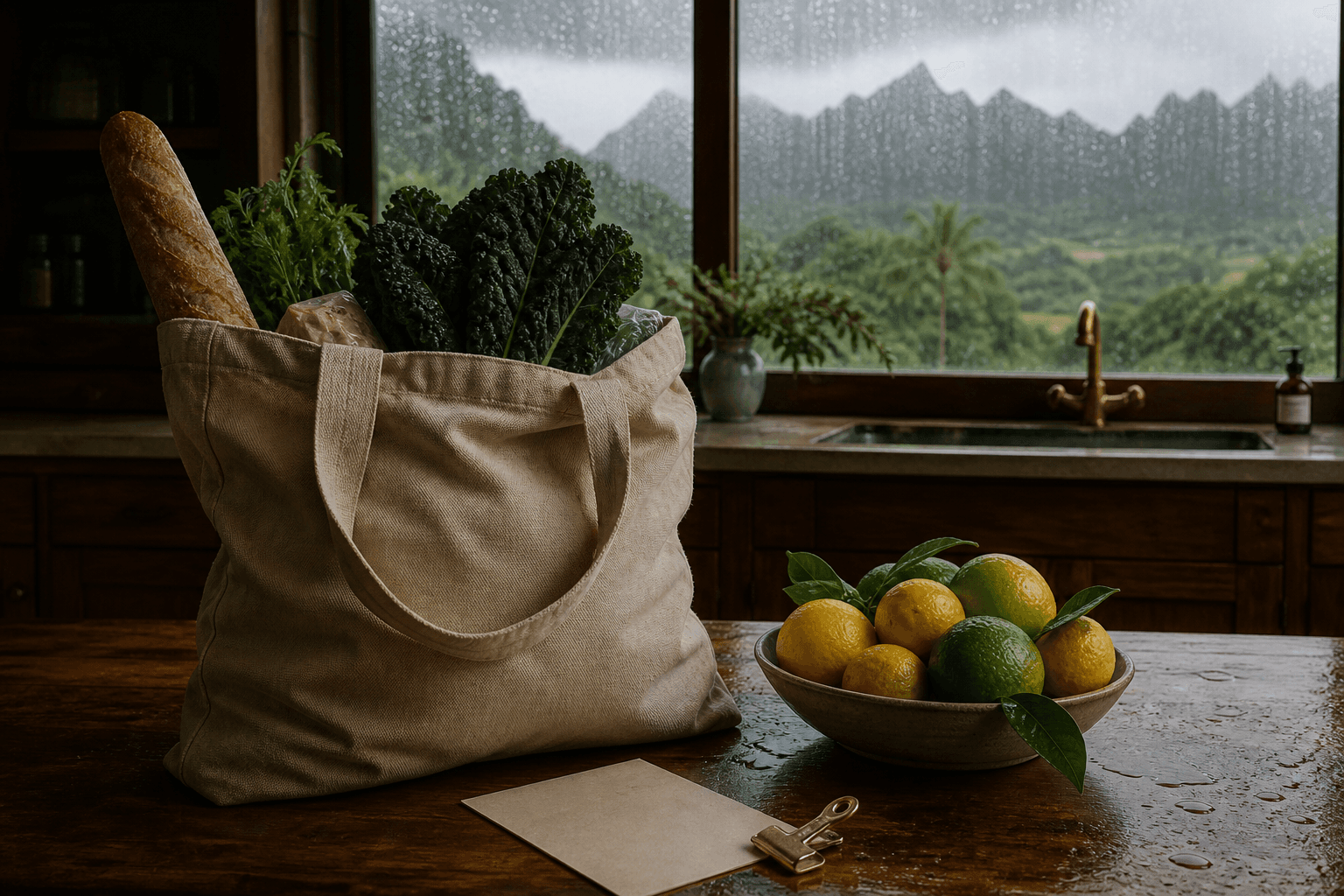
Why the markets matter on Kauaʻi
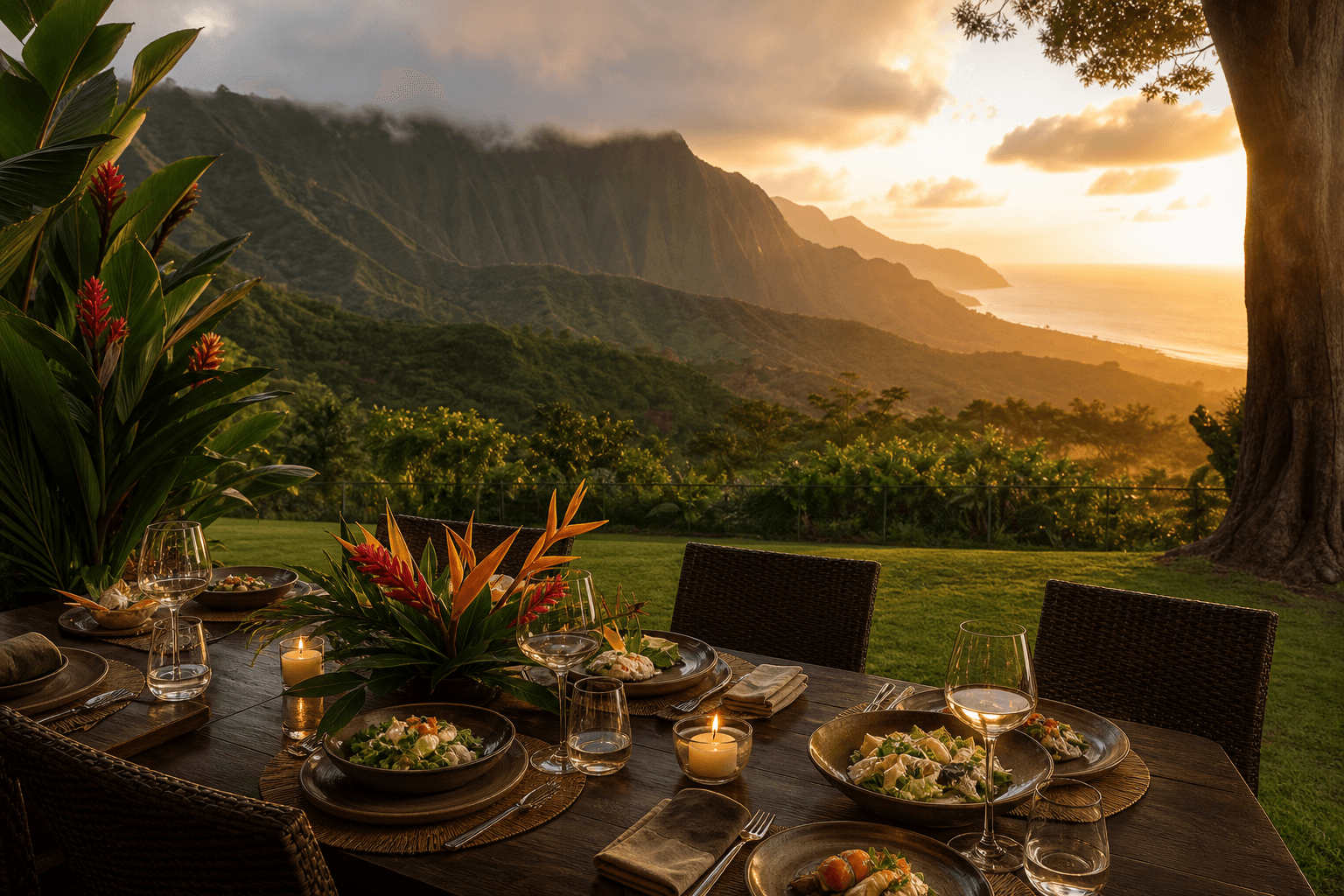
Kauaʻi grows a lot in a small space. The wetter North Shore and east side push tropical fruit and greens. The sunnier South Shore and west side grow different crops. Roadside stands and weekly town markets are where a lot of that produce meets visitors cooking in rental kitchens. A Kauai farmers market is both a grocery stop and a morning out.
For a villa week in Poʻipū, Princeville or Kapaʻa, the markets put better produce on the table than a resort grocery shelf. They also fill the gaps between the island’s smaller grocery selection and a full chef-provisioned week.
Kauaʻi is also an island of drives. A South Shore market morning does not combine cleanly with a North Shore beach day unless you like spending the afternoon in the car. Pick the market that matches the shore you are sleeping on, and save the cross-island run for a day when that is already the plan.
When and where to go
Kauaʻi markets run on a weekly rhythm. South Shore guests often look first at Poʻipū-area markets. East-side guests look at Kapaʻa and Līhuʻe. North Shore guests use smaller local markets and roadside stands when the road is open. Days and hours change with the season and the organisers, so check the current Kauai farmers market schedule before you drive.
Go early. The best greens, avocados and fruit sell out first, and parking fills up. Bring cash, because not every stall takes cards, and bring a cooler bag if you are driving from Poʻipū to the North Shore or the other way around.
Schedules shift. A market that was Saturday-only last year may add a weekday, or pause for a holiday week. Treat any printed list as a starting point and confirm the morning you intend to go. That habit saves more villa weeks than any secret stall tip.
What is in season, roughly
Kauaʻi has a long growing season, but fruit still comes in waves. Mangoes, lychee and other tropical fruit peak in the warmer months. Citrus and avocado varieties take over toward winter. Greens, herbs and flowers appear for most of the year when the weather cooperates.
Do not lock a menu to a fruit you saw on a list. Plan around what is actually on the tables that week. That is how a chef works on Kauaʻi, and it is why a villa dinner built from market shopping tastes different from one built from a single supermarket run in Līhuʻe.
How a chef shops the market for a villa
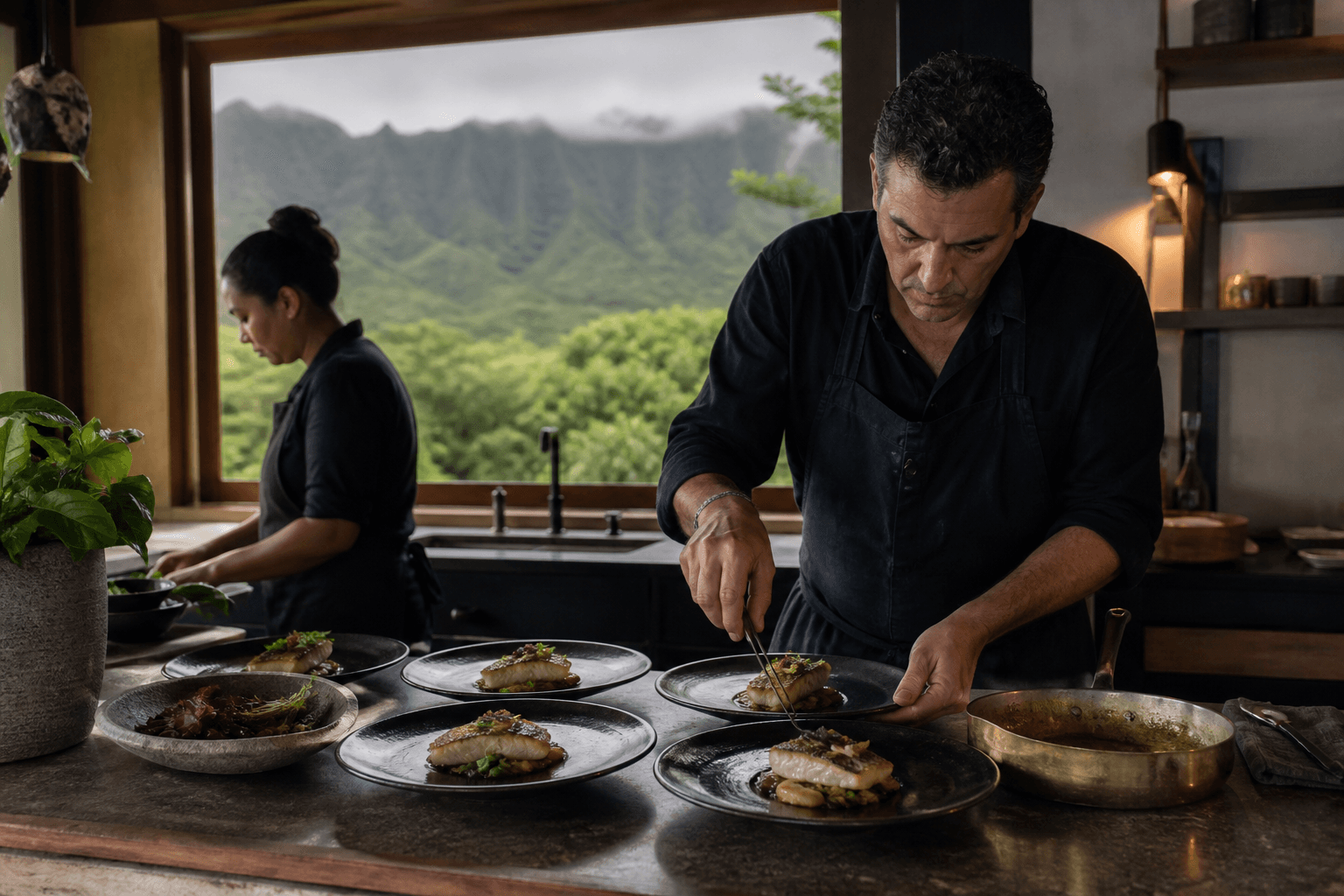
When we can staff a Kauaʻi villa week, the chef writes the menu with you first in broad strokes: a fish night, a grill night, a longer Saturday dinner, lighter lunches. The specific vegetables, fruit and fish are filled in from what is good that week. A week-long menu often reads “catch of the day” or “market greens” rather than naming a species months ahead.
Groceries are billed at cost against receipts when we shop. We name produce and fish as what they are, and we only name a farm once we have verified it in writing. Our personal chef Kauai page explains how a villa dinner runs from shop to cleanup on both shores.
Shopping for yourself on a self-catered day
Many villa weeks mix chef nights with self-catered days. If you are shopping for those, keep it simple: avocados, greens, fruit for breakfast, eggs and bread. A bigger grocery stop in Līhuʻe on the way from the airport still helps, because North Shore and South Shore selection is smaller.
If a chef is cooking later that week, tell them what you already bought so nothing goes to waste. Leftover market produce is easy to fold into a lunch or a breakfast service. The private chef Kauai page covers how inquiry dates and villa nights are planned.
Fish, both shores and the weather
Fish on Kauaʻi depends on weather and season, like everywhere in Hawaiʻi. Most of what a chef cooks comes through a fish counter or a supplier, not a produce stall. Species change. No honest cook can promise one particular fish on a particular night.
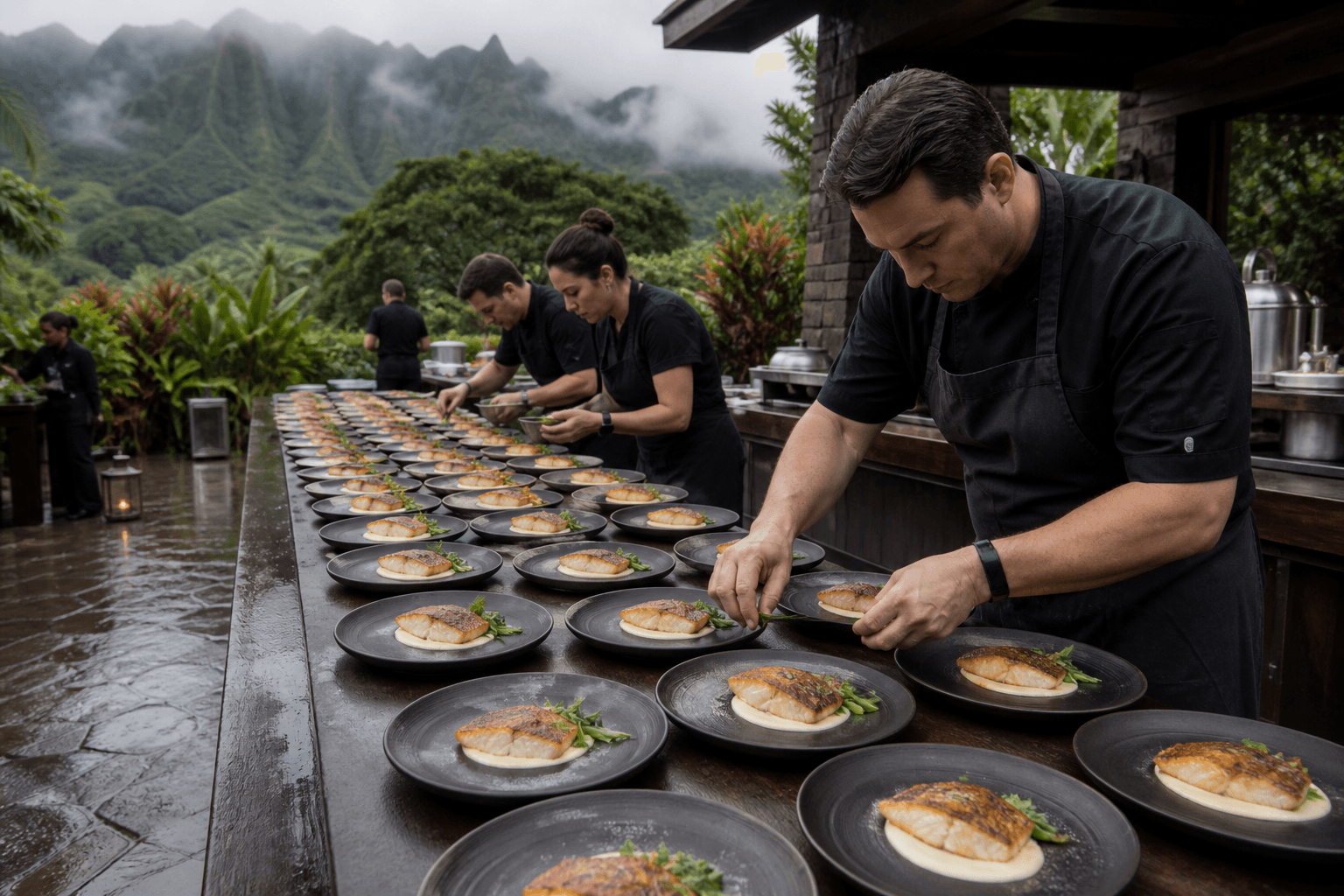
For a group dinner, the chef plans the fish course with a backup. For a staffed party, it is part of the written menu. Our Kauai catering page covers how larger estate events from 10 to 75 guests are cooked and served on both shores.
If you are shopping fish yourself on a self-catered day, buy what the counter says is fresh that morning and cook it the same day. Kauaʻi is not the place to stock a week of raw fish in a rental fridge and hope for the best.
A sample market-led week on Kauaʻi
Here is the kind of outline that works for six guests staying a week in Poʻipū or Princeville. Night one is a welcome dinner after the flight: a market salad, grilled island fish, rice, and sliced fruit. Night three is a grill night on the lānai. Midweek is self-catered, with labelled leftovers in the fridge.
Night five is the longer dinner after a morning market run, with a raw fish starter, a slow-cooked main and a dessert built around whatever fruit looked best. Breakfasts can be added on any day. On the North Shore, keep one night flexible for rain and the Hanalei bridge; on the South Shore, keep one night flexible for trade-wind showers.
Nothing in that outline names a species or a farm ahead of time. The structure is fixed and the ingredients are filled in that week. On inquiry islands like Kauaʻi, that outline only becomes a confirmed plan once a chef is assigned in writing. Send dates early in peak months, because North Shore and South Shore demand both rise around holidays and summer weeks.
Villa kitchens on both shores
Poʻipū and Princeville rentals vary widely. Some estates have professional ranges and outdoor kitchens; some condos have a galley and a small fridge. Send the address when you ask for a quote so the menu matches the space. Outdoor grilling needs host approval. A big buffet needs staging space that is not the only hallway.
North Shore travel time, the Hanalei bridge and rain all belong in the plan. South Shore evenings are usually drier, but trade-wind showers still happen. Either way, a covered lanai or indoor table should be part of any outdoor dinner plan.
If the group is larger than the dining table, staffed Kauai catering can run a buffet on the lawn while smaller nights stay at the private chef table. Inquiry dates are confirmed in writing before a chef is assigned.
From market bag to dinner table
A practical week often looks like this. The chef shops on the first day when the date is confirmed, drops off breakfast and lunch basics, and cooks the welcome dinner. Midweek they top up fish and greens. A second market run before the weekend sets up the big dinner. Between visits the fridge stays labelled so self-catered meals are easy.
For a single dinner, the published Kauaʻi CORE band is $225–$375 a guest with groceries included. Stay Chef days start from $1,650 a day. The full breakdown, including travel to either shore, is on Kauai private chef cost. Every Kauaʻi date is quoted before a chef is confirmed — send your dates, the villa address and the group size.